|
#7005 - Whitework Reticella Sampler
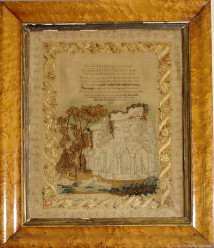
6 1/2" x 35 ". 11 1/2" x 40" including modern frame. This stunning museum quality whitework sampler is circa 1620 - 1650. And, of course, pictures cannot
do it justice. It is filled with amazing techniques including surface embroidery, pulled work, reticella, detached buttonhole stitch, double running stitch
and lots of complex satin stitch.patterns. This is truly a magnificent and extremely rare piece of needlework history.
There is band after band of patterns and techniques that have been largely lost to today's needlewoman. These are extremely advanced techniques that would have been performed by a older stitcher with much
experience and knowledge of needlework. An opportunity to own a sampler of this type and quality is quite rare.
This is a superb example of techniques that were only done in the 17th century. There are nine different bands of exquisite reticella lace. Even on 17th century
samplers reticella is fairly uncommon. Only the most advanced needlewomen were able to do these incredibly time
consuming techniques. To begin a band of reticella the stitcher starts by cutting and removing most of the threads of
the linen, leaving only a few vertical and horizontal threads. Then she reinforces the stability of the fabric by weaving
in diagonal, vertical and horizontal threads to create a grid of squares. She then strengthens the grid by
needleweaving those threads. From there she creates the stunning lacey patterns by adding threads onto the grid.
You can actually see examples of some of these grids on the right edge of some of the reticella bands. In addition,
our needlewoman added a charming example of the detached buttonhole stitch near the top on the outer left edge of
the fabric. This sampler is a perfect tutorial on how to do these almost lost techniques. It is stunningly beautiful and
very labor intensive, so it is not surprising that these are fairly rare techniques to find on a sampler. The final four
bands of the sampler are stitched using pulled work and whitework. The history and the beauty in this magnificent needlework are really quite difficult to describe.
There is a darkening or stain at the top of the sampler and there is an overall darkening to the entire sam- pler. But despite the number of threads removed to create the lace
patterns, the fabric is still strong and stable. There are a few other very small stains but I would have to say that this stunning piece of history is still in good condition. It
has been backed with acid-free board.
SOLD |